Quick answer
Most people stand up and ride white-water in their very first lesson (about 2 hours). Becoming confident enough to catch your own waves takes roughly 3 to 5 sessions, or one good week of surfing. Truly mastering it takes years — but the fun starts on day one.
It's the question every first-timer asks on the beach: "how long until I can actually surf?" The honest answer is that surfing gives you wins immediately and keeps humbling you for life. Here's what really happens, session by session.
Your first day: standing up
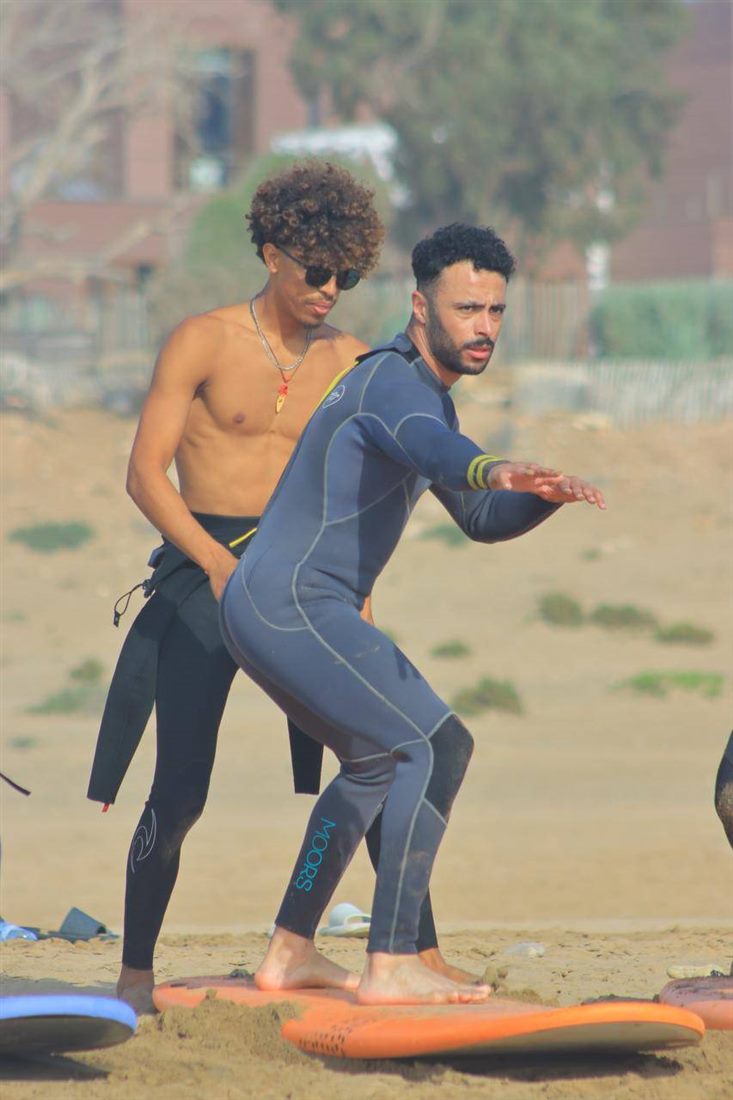
Standing up is easier than people expect. In a beginner lesson, you start on the sand learning the pop-up, then move into shallow, gentle white-water where your instructor pushes you onto each wave. Most beginners are riding to the beach standing up within their first session. That first wave is the moment people get hooked.
Your first week: becoming independent
The jump between day one and day five is huge. With regular sessions you stop needing a push, start paddling into your own white-water waves, learn to turn, and take your first attempts at green (unbroken) waves. This is why a surf camp or multi-day course is so effective — the consistency compounds fast.
The realistic learn-to-surf timeline
| Time in | What you can usually do |
|---|---|
| Lesson 1 (~2 hrs) | Stand up and ride white-water to the beach |
| Day 2–3 | Catch white-water waves without a push, start steering |
| 1 week | Fairly independent, first green-wave attempts |
| 1 month (regular) | Catching green waves, riding along the face |
| 1 year+ | Confident surfer, turning and reading waves |
| Lifetime | Still learning — that's the beauty of it |
Never surfed? Your first wave is closer than you think.
See beginner surf lessons in TaghazoutWhat affects how fast you learn
- How often you surf. Consistency beats everything. Five days in a row teaches you more than five weekends spread out.
- The waves you learn on. Gentle, sandy beginner beaches (like the ones around Taghazout) let you progress safely and fast. Learning on the wrong waves slows everyone down.
- Coaching. A good instructor fixes small mistakes before they become habits, which saves you weeks of frustration.
- Fitness & swimming. Basic comfort in the water and a bit of paddling stamina help, but you don't need to be an athlete.
- Mindset. Relax, expect to fall, and enjoy it. The people who progress fastest are the ones having the most fun.
How to learn faster (the shortcuts that actually work)
- Take lessons, don't wing it. Self-taught surfers usually build bad habits that take ages to unlearn.
- Surf consecutive days. Book a few days in a row rather than one lesson.
- Learn somewhere with reliable beginner waves and warm water — you'll get far more time on the board.
- Then rent and practise. Once you can stand up, a rented foam board lets you log cheap hours between lessons.
That combination — good coaching, consecutive days, gentle waves — is exactly why so many people choose to learn on a trip to Taghazout rather than back home in cold, fickle surf.
Frequently asked questions
Can you learn to surf in a week?+
Yes. A week is plenty of time to get comfortable. With daily lessons or a surf camp, most people go from their first white-water waves on day one to catching and riding waves fairly independently by the end of the week. A week of consistent surfing beats months of occasional sessions.
Is surfing hard to learn?+
Standing up is easier than it looks — most beginners manage it in their first lesson. The genuinely hard part is reading waves, paddling into them at the right moment and surfing green (unbroken) waves, which takes practice. But you'll have fun and feel progress from day one.
Can I learn to surf at 40, 50 or older?+
Absolutely. We teach beginners of all ages, including plenty in their 40s, 50s and beyond. Surfing rewards patience and time in the water more than raw athleticism. On gentle beginner waves with a good instructor, age is rarely a barrier to standing up and having a great time.
How many surf lessons do I need?+
One lesson is enough to stand up and have fun in the white-water. To become fairly independent — catching your own waves and starting on green waves — most people need around three to five lessons, which is why multi-day courses and surf camps are the fastest, best-value way to progress.