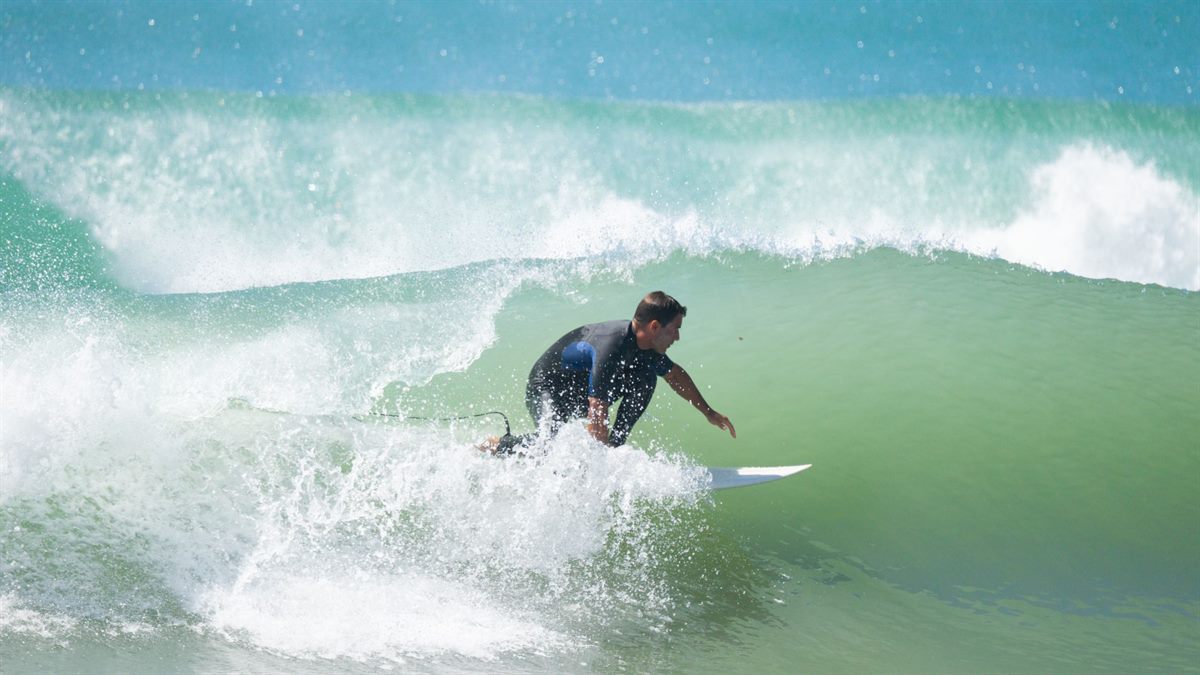
On its day, Anchor Point links section after section into one of the longest rights in the country. Photo via Pexels.
Quick answer
Anchor Point is a long right-hand point break at the north end of Taghazout and the most famous wave in Morocco. It's a winter wave (roughly October–April) that works best on north-west groundswell, light offshore wind and around mid tide. It's an intermediate-to-advanced spot — beginners should learn at the nearby beach breaks first. If you already surf but don't know the coast, the smart move is a local surf guide.
Ask anyone where surfing in Morocco started and the answer is the same: right here. When European surfers first followed the coast road south in the 1960s and 70s, the wave that stopped them in their tracks was the long, mechanical right that wraps around the headland just north of Taghazout village. It gave the whole region its identity — and today, according to Surfline's spot report, it's still the centre of surfing on this stretch of coast, with several serious breaks within a short drive.
What is Anchor Point?
Anchor Point is a right-hand point break. Instead of breaking straight onto a beach, the swell hits a rocky point and peels along it, so the wave holds its shape and lets you ride in one direction for a long way. If you're new to the term, a point break is generally cleaner and more predictable than a beach break — which is exactly why surfers travel for them.
What makes Anchor special is its length and its sections. On a good day the wave links up: a steep drop off the top of the point, a fast wall, a couple of hollow sections where you can tuck in, then a softer inside where you can throw turns until your legs give out. Rides of 200–300 metres are normal on a solid swell, and on the very best days it connects almost the whole point.
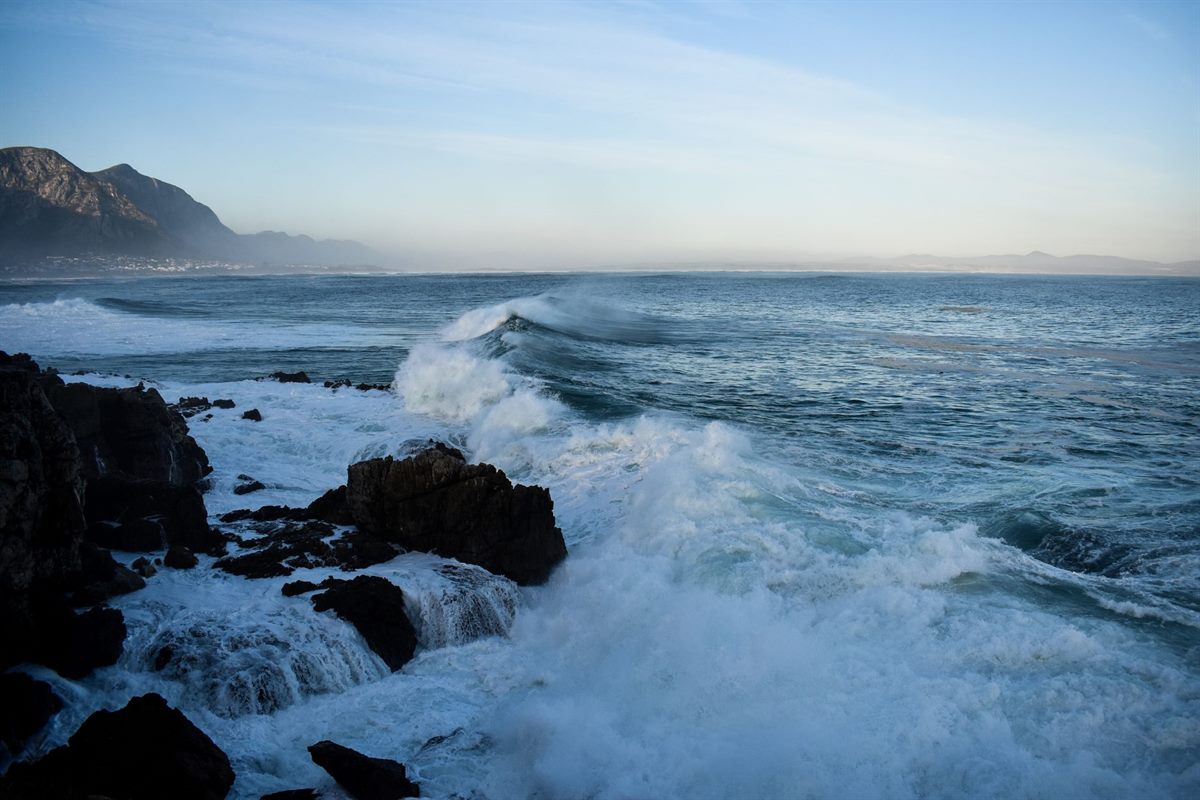
The points around Taghazout wrap swell down rocky headlands like this — that's what creates the long, peeling walls. Photo via Pexels.
When it works — swell, tide & season
Anchor Point is a winter break. The big North Atlantic lows that fire from autumn to spring are what wake it up. Here's the short version most surfers plan around:
| Factor | Best conditions |
|---|---|
| Season | October to April (peak Nov–Mar) |
| Swell direction | North-west / west groundswell |
| Swell size | Chest-high and up; comes alive when it's solid |
| Wind | Light offshore — usually early morning |
| Tide | Works through the tide; many prefer mid to low |
Every spot has its own quirks day to day — always check a live forecast before you paddle out. In summer, Anchor is often flat; that's beach-break and beginner season instead.
Confident surfer, but don't know which spot's firing today? Let a local read the swell for you.
See surf guiding in TaghazoutWho should surf it (and who shouldn't)
Let's be honest, because it matters for your safety and everyone else's session: Anchor Point is not a beginner wave. The take-off zone is over rock, the crowd is experienced, and when it's big the paddle-out and currents are no joke. Trying to learn here on a busy swell is how people get hurt and lose boards.
If you're a first-timer or still finding your feet, the good news is that some of the best beginner beaches in the country are minutes away — Panorama, Croco, Devil's Rock and the beach breaks around Tamraght offer forgiving, rolling whitewater. That's where our beginner surf lessons run, and where you build the paddling, timing and pop-up you'll eventually need for a point like this.
If you're a solid intermediate or advanced surfer who can already read a lineup, catch an unbroken wave and control your board in a crowd — Anchor Point is one of the most rewarding waves you'll ever ride. A surf camp or course is a great way to stack up several coached point sessions in one trip.
The crowd & lineup etiquette
Fame has a price: when Anchor is firing, it gets busy. Surfers fly in from all over Europe for it in winter. That makes etiquette essential. A few unwritten rules:
- The surfer closest to the peak (deepest, nearest the point) has priority — don't drop in
- Don't paddle straight to the top of the point on your first wave — earn your place, wait your turn
- Paddle wide around the breaking wave, never through the lineup
- Respect the locals and regulars — a bit of humility goes a long way here
- If it's beyond your level, there's zero shame in surfing a mellower spot down the road
The other points nearby
Anchor is the headline act, but it's one of a whole run of right-hand points on this coast. When Anchor is too crowded or not quite right, locals slide to the neighbours: Killer Point (heavier, further north), La Source, Mysteries, Boilers and the mellower Panorama. Each one likes a slightly different swell and tide, which is the whole reason a guide is worth it. We break the full lineup down in our guide to the best surf spots in Taghazout, and the seasons in the best time to surf Taghazout.
How to actually surf it well
Two things separate a dream Anchor session from a frustrating one: being there on the right day, and being in the right part of the lineup. Both are hard if you're visiting for a week and don't know the coast. That's precisely what local surf guiding solves — we watch the forecast, pick the spot that's actually working that morning, drive you there, and put you in the right position so you don't burn your trip sitting in the wrong place. Need a board for the points? We also do surf & board rental.
Want the wider picture of the town first — where it is, the history, the vibe? The Taghazout entry on Wikipedia is a good neutral overview, and our things to do in Taghazout guide covers everything off the water.
Frequently asked questions
What is Anchor Point in Taghazout?+
Anchor Point is a long right-hand point break at the north end of Taghazout, Morocco, and the most famous wave on this coast. It peels down a rocky point over a rock-and-sand bottom and, on the right swell, offers rides of several hundred metres with hollow, high-performance sections. It named the whole region's surf scene and draws surfers from all over the world every winter.
When does Anchor Point work best?+
Anchor Point is a winter wave. It comes alive from roughly October to April on north-west groundswell, working best on a solid mid-period swell with light offshore or morning winds and around mid tide. Summer is usually too small. The most consistent, powerful days fall between November and March.
Can beginners surf Anchor Point?+
No — Anchor Point is an intermediate-to-advanced wave. The take-off is over rock, the crowd is experienced and competitive, and the paddle-outs and currents are demanding when it's big. Beginners are far better off at nearby beach breaks like Panorama, Croco, Devil's Rock or Tamraght, where our lessons run, before working up to the points.
How do I surf Anchor Point with a guide?+
If you already surf but don't know the coast, a local surf guide reads the forecast, picks the spot that's firing on the day, and gets you into the right part of the lineup safely. InTaghazout runs surf guiding around Taghazout's points, including Anchor Point when it's on, for confident intermediate and advanced surfers.